

Femoral Head Ostectomy (FHO) Surgery in Dogs and Cats
A Proven Surgical Option for Hip Pain Relief and Improved Mobility
By Dr. Nicole LaMora
At Brunswick Veterinary Hospital, I understand how difficult it can be to watch your pet struggle with chronic hip pain, arthritis, or a traumatic injury. A Femoral Head Ostectomy (FHO) is a well-established orthopedic surgery that can provide excellent pain relief and restore quality of life for many dogs and cats suffering from painful hip conditions.
What Is a Femoral Head Ostectomy (FHO)?
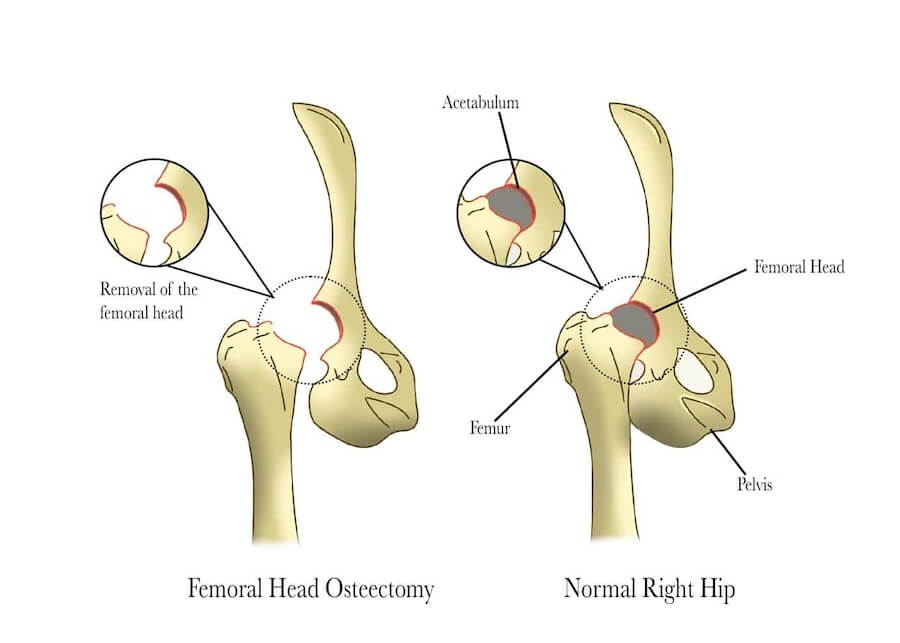
A Femoral Head Ostectomy, commonly referred to as an FHO, is a surgical procedure in which the ball portion of the hip joint (the femoral head and neck) is removed. By eliminating the painful bone-on-bone contact within the hip joint, the body is able to create a functional "false joint" composed of scar tissue and surrounding muscle.
While this false joint is not identical to a normal hip, it can provide excellent comfort and function, allowing many pets to return to walking, running, playing, and enjoying their daily activities without chronic pain.
When Is FHO Surgery Recommended?
FHO surgery may be recommended when a pet is experiencing significant hip pain that cannot be adequately managed with medications or conservative treatment.
Common conditions treated with FHO surgery include:
- Hip dysplasia
- Severe hip arthritis
- Femoral head fractures
- Hip luxation (hip dislocation)
- Legg-Calvé-Perthes disease
- Failed previous hip surgeries
- Situations where total hip replacement is not appropriate or feasible
Although FHO surgery is most commonly performed in cats and small to medium-sized dogs, many larger dogs can also achieve excellent outcomes when appropriate rehabilitation and physical therapy are incorporated into their recovery.
What Happens During Surgery?
During the procedure, the diseased or damaged femoral head and neck are carefully removed. This eliminates the source of pain within the hip joint.
Following surgery, the surrounding muscles gradually adapt to support the limb and create a comfortable, functional pseudo-joint. Because there is no longer painful bone-on-bone contact, most pets experience significant improvement in comfort once healing is complete.
Recovery After FHO Surgery
Successful recovery following FHO surgery depends on a combination of pain management, controlled activity, and physical rehabilitation.
Many pets begin placing weight on the limb within the first one to two weeks after surgery. Improvement continues gradually over several months as strength and muscle mass return.
Key components of recovery include:
- Strict activity restriction during the initial healing period
- Appropriate pain management
- Early controlled limb use
- Physical therapy exercises
- Gradual return to normal activity
The goal is to encourage comfortable use of the leg while allowing the surrounding muscles to strengthen and support the new false joint.
What Is the Long-Term Prognosis?
The long-term prognosis following FHO surgery is generally excellent for appropriately selected patients.
Most pets experience:
- Significant reduction in pain
- Improved mobility
- Increased activity levels
- Better overall quality of life
Many owners report that their pets return to activities they had not enjoyed in months or even years due to chronic discomfort.